

How To Clean Fire Disc
Using and Caring for your DISCADA There is really only one successful way to season a plow disk cooking utensil, and that is to use it, use it, use it!!
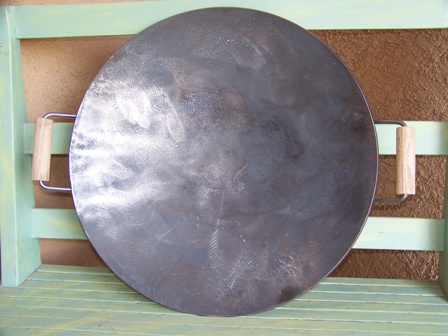
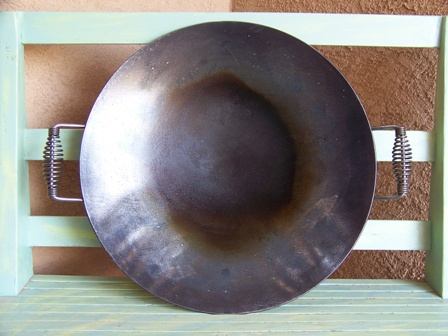
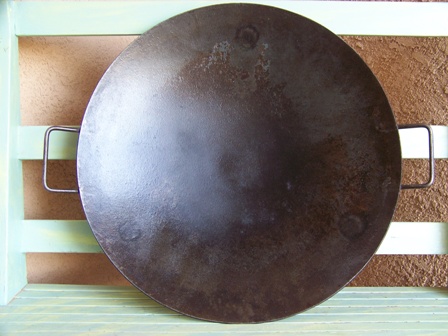
Center Picture: Initial Seasoning as delivered (Ready for first use)
Right Picture: Seasoned Disk (About a year old)
When I cook with my personal discada I use a generous coating of Extra Virgin Olive Oil. Always preheat your disk and then add your groceries…… We have provided the initial seasoning for your disk so you can use it right away. It only gets better after time and eventually you will have a very nice black seasoned disk. Be gentle with it until you build up a nice seasoned coating.
Just follow a few rules when using your disk and it will provide you with a lifetime of use!
Until the disk is very well seasoned, either by many uses or repeated seasonings, do not attempt to cook foods with a high acid content. The corrosive nature of high-acid foods will not react well to the unseasoned disk. Once a disk is well-seasoned, however, you can use it for just about anything. Storing – store your disk in a dry place….check out our awesome covers made by fellow Veteran Eric with Mountain Ridge Gear!
Bare cast-iron vessels have been used by humans for cooking for hundreds of years and your DIscada is no different in treatment (Our discs are carbon steel). The following includes examples using cast iron (ex. Dutch Ovens) and applies to the Discada as well. The Discada's ability to withstand and maintain very high temperatures makes it a natural cookware choice for searing or frying, and its excellent heat diffusion and retention makes it a natural choice for long-cooking stews like gumbo or Chili con carne. Because your Discada can develop an extremely "non-stick" surface, they are also a good choice for egg dishes, in particular scrambled eggs. Some of the types of cookware made out of bare cast iron include dutch ovens, frying pans, deep fryers, woks, potjies, and griddles. Bare cast iron cookware requires seasoning just like your DIscada—impregnation of the cooking surface with oil—to prevent rusting, and to create a non-stick surface. Technique 1 - Simply wipe the cleaned cast iron with a good oil or fat and use it for frying and roasting, particularly high fat foods, like bacon. The oil or fat will impregnate the cast iron and gradually convert into a seasoning over time. Rendering animal fat in a new pan will have the same effect. A new cast iron pan and your Discada will not be 100% seasoned after a single treatment. It takes repeated use for the pan to develop a seasoned, non-stick surface. If too much oil or shortening is applied to a pan in the seasoning process, it will pool and gum up when the pan is heated. In this case, the goo can be scraped off and some more grease rubbed over the spot, or the pan can be re-scrubbed and reseasoned. Heating the pan upside-down may help prevent gumming, but will be more likely to drip grease unless protected by a foil-lined baking sheet. Seasoning at higher temperatures approaching the smoking point of the oil used will result in darker seasoned coatings in less time that aren't sticky or gummy. Care and cleaning after seasoning - Frying in the DIscada will help maintain the seasoning, as will roasting fatty meats or other greasy foods. Prolonged contact with wet or acidic foods, such as tomatoes, can dissolve or damage the finish. It is a common misconception that one should never use dish soap to clean seasoned cast iron cookware, since this will immediately remove the oil, and 'unseason' the pan (or even, according to some cooks, leave soap residue that will poison the food). In fact, a very well-seasoned pan can tolerate dilute dish soap, and, for infrequently used items, this may be preferable to leaving rancid grease on the cooking surface. In general, however, regular washing with soap is not recommended.
New cast iron must be seasoned before use. Some companies now offer pre-seasoned pans, but, like "home-seasoned" cast iron, these may need to be re-seasoned if they are washed with strong soap or allowed to rust. Seasoning is a process by which a layer of animal fat or vegetable oil is applied and cooked onto cast iron or carbon steel cookware. The seasoning layer protects the cookware from rusting, provides a non-stick surface for cooking, and prevents food from interacting with the iron of the pan. Almost all cast iron cookware is seasoned. Well-seasoned cookware will have a very smooth black surface. Fats and oils typically used for seasoning include lard, cooking oils / Olive oils / Peanut oils, and palm or coconut oil.
Seasoning techniques - Once cleaned, cookware can then be seasoned. There are several techniques for seasoning cast iron - these vary based on the smoke point of the oil or fat used.
Technique 2 - First, heat the cookware until water quickly boils when splashed onto its surface. Next, using a rag, wipe a thin coat of lard or oil onto the surface of the cookware. Lower the heat and continue to apply oil on the surface until the seasoning coating develops. Turn off heat and let it cool down. At this point, the cookware should have a black sheen and be ready for cooking.
When cast cookware is washed with soap it should be lightly oiled before it is used or stored away. There are several methods for cleaning seasoned cast iron cookware:
Scrub the inside of a warmed pan with a tablespoon of a coarse salt, such as kosher salt, add a small amount of olive oil, and rub with a small piece of an old cotton cloth. Rinse with cold water.
Scrub the pan with boiling or near-boiling water and a stiff nylon or fiber brush.
Use veggie wash (milder than soap) and a stiff nylon or fiber brush.
Boil a solution of cornstarch or rice starch and water in the pan, tilting the pan to make sure the boiling liquid touches all the way up the sides. Then pour out the resulting grease-water-starch solution, and peel off whatever dries onto the sides of the pan. Rinse the pan in hot water. In all cases, the cookware should be dried thoroughly after washing, and oiled lightly if not already very well seasoned.
How To Clean Fire Disc
Source: https://www.southwestdisk.com/seasoning-care-guide/
Posted by: pastortrie1935.blogspot.com
0 Response to "How To Clean Fire Disc"
Post a Comment